
Introduction
Water is so basic that we often take it for granted. You turn on a faucet, fill a glass, and drink without much thought. Yet this simple liquid is literally keeping you alive every second of every day. While most people know they should drink more water, few truly understand just how deeply hydration affects every single process happening inside their bodies right now. Narrative Review of Hydration and Selected Health Outcomes in the General Population – PMC
Hydration is essential for maintaining body temperature, boosting brain function, and keeping fluid balance. This article explores how staying hydrated impacts daily life and well-being, providing a roadmap to understanding water’s crucial roles in the human body.
By staying hydrated, you can improve your energy levels, support your skin, enhance digestion, and help your organs function smoothly.
Let’s dive into the details by exploring the science behind water in your body and how it’s distributed, as well as the amazing roles it plays in your daily life.
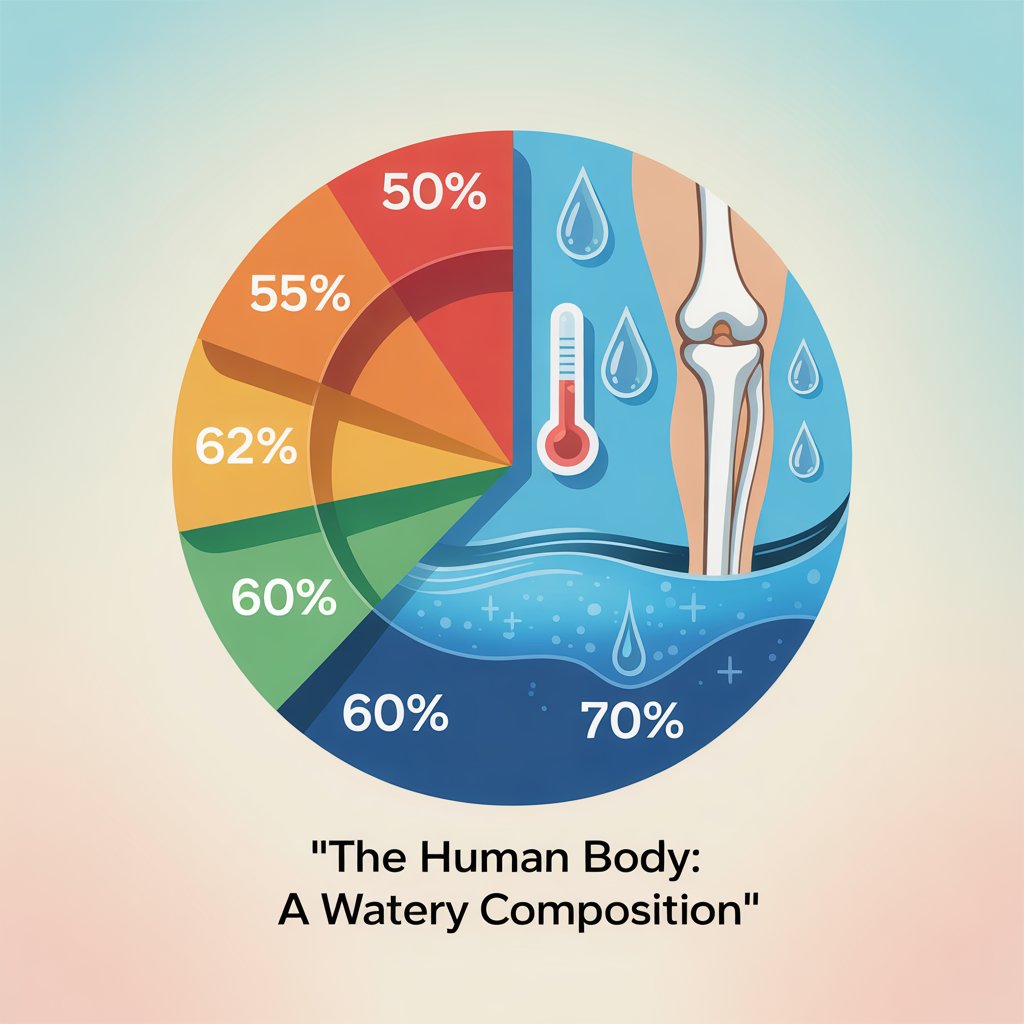
Your body is essentially a sophisticated water balloon. Water makes up between 50-70% of your total body weight, which means a 150-pound person is carrying around 75-105 pounds of pure water.
Your body’s water percentage changes as you grow older. Babies have about 75% water, which is why their skin is so soft and plump. As people age, this percentage drops, and older adults are usually around 50% water. Men often have more water in their bodies than women because muscle holds more water than fat.
- Essential Functions of Body Water
When you’re overheating during exercise, water moves heat from your core to your skin through circulation, then carries it away through sweat. This cooling system is so efficient that you can maintain a steady internal temperature even when the outside temperature varies by dozens of degrees.
Your joints depend on water, too. The synovial fluid that keeps your knees, elbows, and other joints moving smoothly is mostly water. Without adequate hydration, this natural lubricant becomes less effective, potentially leading to joint stiffness and discomfort.
Beyond temperature control and lubrication, proper hydration is vital for the functioning of major body systems—starting with your cardiovascular health.
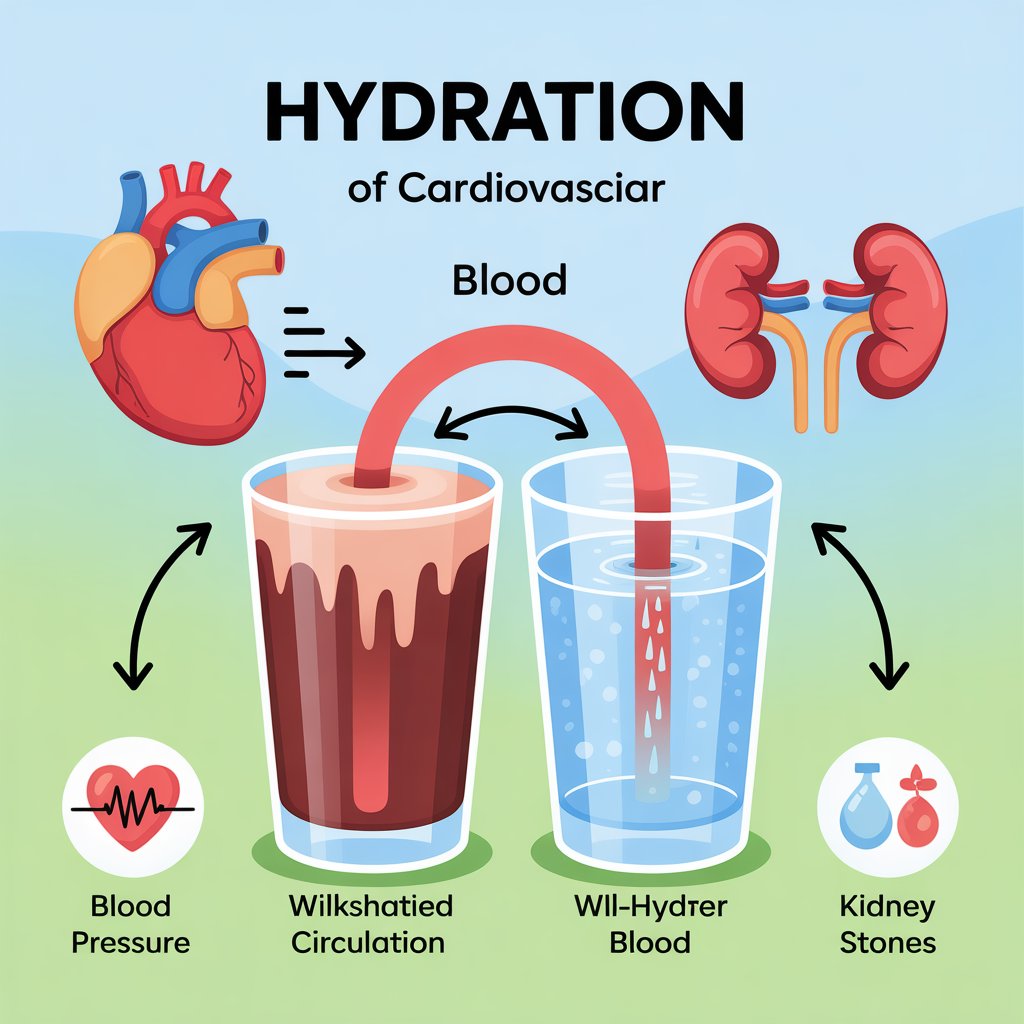
When you are dehydrated, your heart works harder. With less water, your blood volume drops and your blood becomes thicker, making it harder to pump. Imagine trying to drink a milkshake through a straw compared to water; your heart faces a similar challenge moving thick blood through your body.
Proper hydration helps maintain healthy blood pressure by ensuring adequate blood volume. When you’re well-hydrated, your blood flows more easily, reducing the pressure on your artery walls. This improved circulation means oxygen and nutrients reach your organs more efficiently.
Studies have shown that people who stay properly hydrated have lower risks of developing heart disease and experiencing strokes. Even mild dehydration can strain your cardiovascular system over time.
- Kidney and Urinary Health
Your kidneys filter about 50 gallons of blood daily, removing waste products and excess substances. This filtration system works best when there’s plenty of water to dissolve and flush away toxins through urine.
Concentrated urine from dehydration creates an environment where kidney stones can form more easily. These painful mineral deposits are much less likely to develop when you’re drinking enough water to keep your urine dilute and flowing freely.
Proper hydration also helps prevent urinary tract infections by regularly flushing bacteria out of your urinary system before they can multiply and cause problems.
Water doesn’t just keep your body working; it’s just as important for your mind. Hydration greatly influences your mental performance and cognitive function.
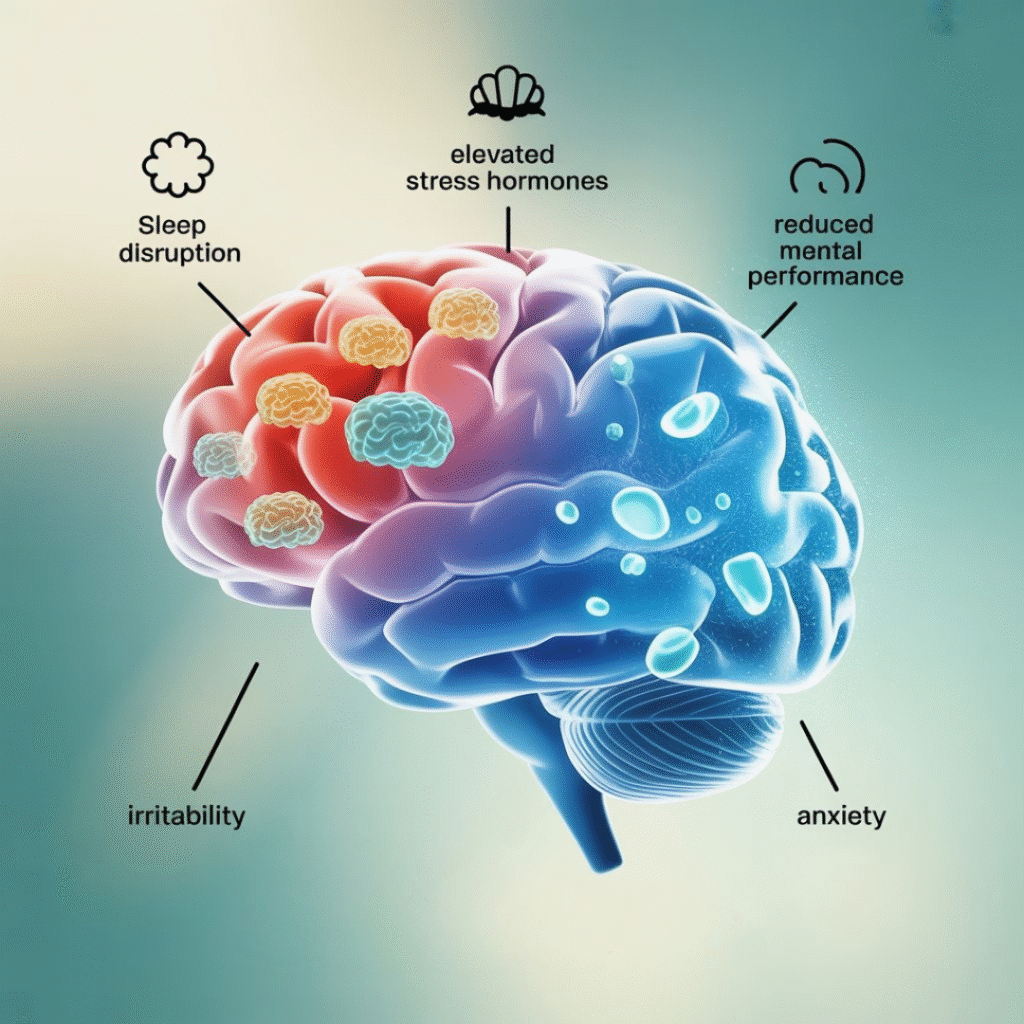
Your brain is about 75% water, making it one of your most water-dependent organs. Brain cells need proper hydration to maintain their shape and function effectively. When you’re dehydrated, these cells can actually shrink slightly, affecting how well they communicate with each other.
Dehydration also impacts neurotransmitter production. These chemical messengers that carry signals between brain cells don’t work as efficiently when water levels drop.
- Mood and Mental Well-being
When you are dehydrated, you might feel irritable, anxious, or just not yourself. This happens not only because you feel uncomfortable, but also because dehydration changes your brain and stress hormone levels.
Poor hydration can also disrupt sleep quality. When you’re dehydrated, your body has to work harder to maintain basic functions, potentially interfering with the deep, restorative sleep stages your brain needs to process emotions and memories effectively.
Water not only helps internal function but also keeps your skin fresh and hydrated.
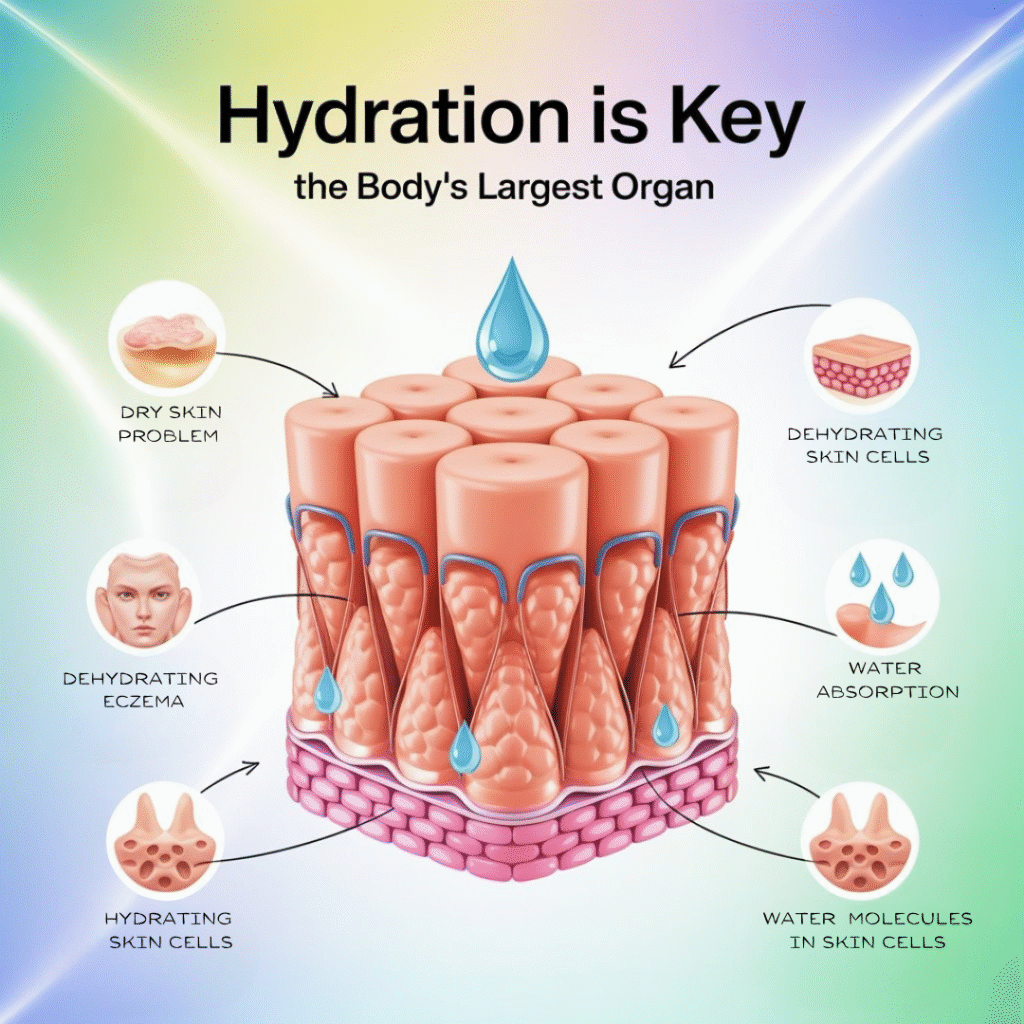
Your skin is your body’s largest organ, and like all organs, it depends heavily on proper hydration. The deeper layers of your skin need water to maintain the structure and function of skin cells, while the outer layer relies on adequate moisture to maintain its protective barrier function.
Well-hydrated skin feels plump and elastic because water helps maintain the spaces between collagen fibers. This structural support is what gives young, healthy skin its smooth, firm appearance.
- Common Skin Conditions and Hydration
Many common skin problems have hydration components. Dry, flaky skin often improves with better water intake, though topical moisturizers are usually needed too. Some people find that their eczema or dermatitis symptoms become more manageable when they stay well-hydrated.
The relationship between acne and hydration is complex, but dehydrated skin can overproduce oil as it tries to protect itself, potentially contributing to breakouts in some people.
Summary
Water truly powers every function in your body, from the obvious ones like temperature regulation, waste removal, effects on mood, mental sharpness, and skin health. Your cardiovascular system, digestive tract, kidneys, brain, and skin all depend on adequate hydration to function optimally.
The key takeaways for better hydration are simple but powerful: pay attention to your body’s signals beyond just thirst, understand that your needs vary based on activity and environment, and recognize that proper hydration is an investment in both your daily performance and long-term health.
Frequently Asked Questions
Q: How much water should I drink daily?
A: General recommendations suggest 8-10 cups daily, but individual needs vary based on activity level, climate, body size, and overall health status.
Q: Do coffee and tea count toward daily fluid intake?
A: Yes, caffeinated beverages contribute to hydration despite mild diuretic effects, though plain water remains the optimal choice.
Q: Is it better to sip water throughout the day or drink large amounts at once?
A: Consistent sipping throughout the day allows for better absorption and maintains steady hydration levels compared to consuming large volumes at once.